Localized apocalypse is all the rage. Last year, 28 Years Later caught up with the England of Danny Boyle’s 2002 film, revealing that the rest of Europe had successfully fought off the zombie virus and quarantined Great Britain. The rest of the world apparently continued at the pace of the real world while the island nation became increasingly apocalyptic. It is easy and encouraged to read the film as a Brexit allegory, but the film goes further into British imperial and pop cultural history, contextualizing the zombie film, in which men from an isolated village embark onto the mainland to cull infected, as a revitalization of a longstanding colonial project.
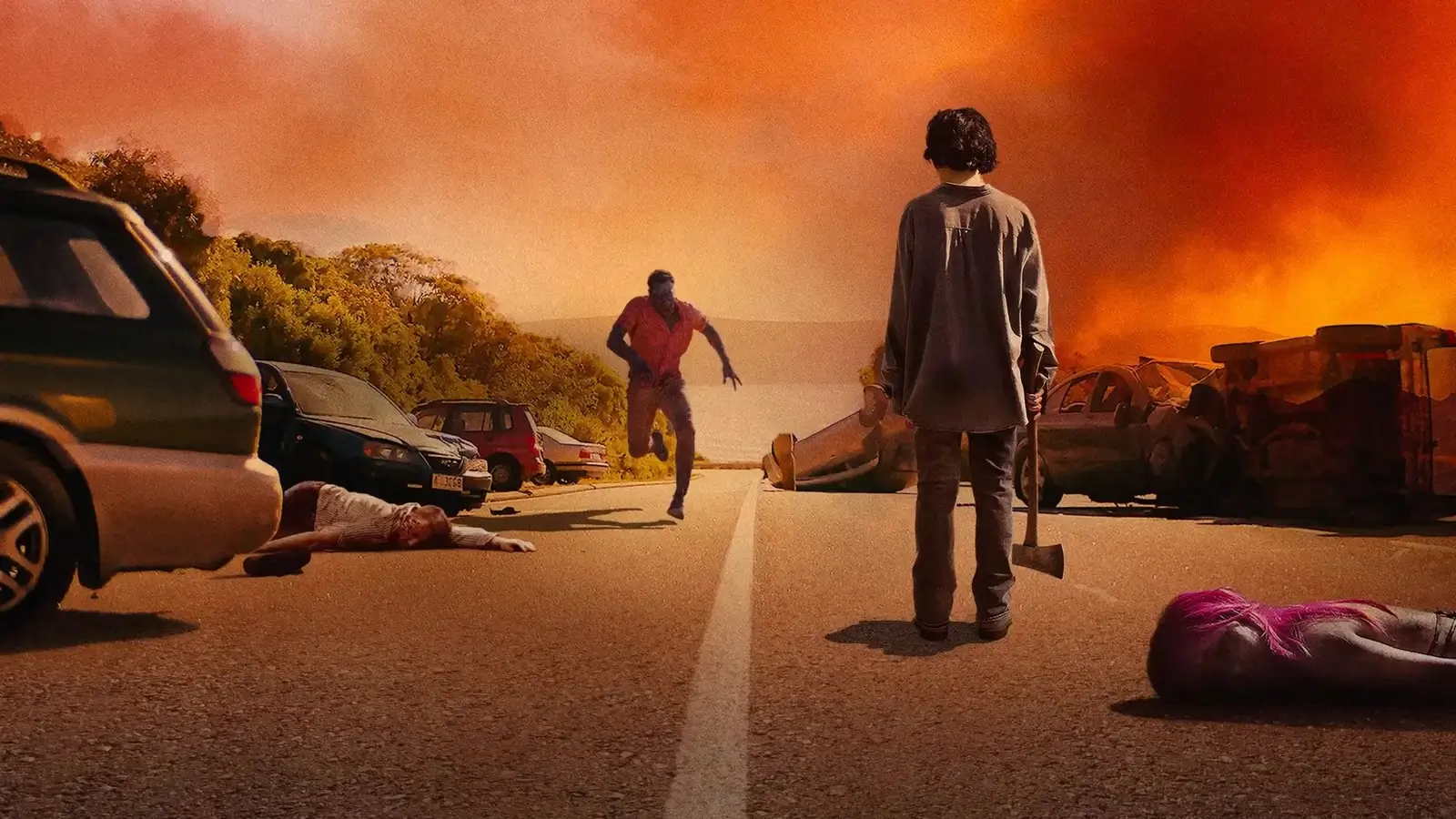
We Bury the Dead’s inciting incident implies similarly charged goals. The film, which premiered in 2024 but is only seeing release now, opens with an American pulse weapon being accidentally deployed off the coast of Tasmania. Every living thing on the island is killed instantly. Ava (Daisy Ridley), an American mourning the loss of her husband who was on a business trip in Tasmania when the bomb dropped, comes to the island to participate in a body identification and disposal effort. Ava’s Americanness positions her as not only an outsider among the Australians in her unit but presumably as representation of an opposing force worthy of suspicion, her nationality a reminder that this was an unnatural disaster caused by the wanton military growth of the American hegemony. At least you’d assume this is the intention. Why else force the British Ridley to act through a tough American accent? Aside from a few pointed looks or loaded lines, however, writer-director Zak Hilditch does not find many opportunities to follow this thread to anything more than superficial ends.
Once on site, Ava is informed that a minority of the dead have come back to life. The returned take their typical shambling form and if Ava or one of her compatriots encounters one of the undead, they’re instructed to alert their military escort to quickly dispatch it. Hilditch brings a few welcome wrinkles to the genre with his zombies. The majority of them are docile and, for the most part, Hilditch does not stage typical horror movie setpieces. We Bury the Dead attempts to humanize its zombies rather than present them as cannon fodder—one undead that Ava encounters buries the remains of his still dead family—but the approach is at odds with a film that increasingly narrows its focus on Ava’s own grief to the point of solipsism. Take an early scene where Ava and her disposal partner, Clay (Brenton Thwaites), have to drag the corpse of a fat woman out of her home. Her size is played for gross laughs as the two struggle to move her through her own home. Just when it seems that the film might offer her some humanity as the camera moves over to photos of the woman’s wedding day, Ava flashes back to memories of her own marriage. The dead woman, a moment ago the butt of a despicably lazy fat joke, can only be extended dignity through reflecting Ava’s own emotional state.
Ava’s presence in Tasmania is selfishly motivated. She has only joined the identification effort to find the body of her husband and seek closure for marital problems that are revealed through persistent flashbacks. He died hours south of where her unit is deployed so she, with the help of Clay and a found motorcycle, goes AWOL to make her way across the island, avoiding military patrols and escaping from the stray dangerous zombie or two. All of the episodes along the way, including a long interlude involving a soldier and his dead wife that qualifies as the most suspenseful setpiece in the film, serve to further dig into Ava’s headspace and refract her grief around her. It’s increasingly familiar for horror films to deal bluntly with grief and domestic issues to the point that it can feel like hackwork to even criticize it. All we can do with the trauma narrative status quo (since complaining about it doesn’t seem to be producing results) is identify which films manage to do it well. We Bury the Dead is not a total failure but it leaves a lot to be desired, marginalizing the very ideas that make it difficult to write off entirely by opting to cover well-trodden, dull ground.
—
We Bury the Dead is now playing in theatres everywhere.
Directed by Zak Hilditch; written by Zak Hilditch; starring Daisy Ridley, Brenton Thwaites, Mark Coles Smith, Matt Whelan, Chloe Hurst, Kym Jackson, and Dan Paris; 95 minutes.


 Derek
Derek
 Isabelle
 Ross
Ross